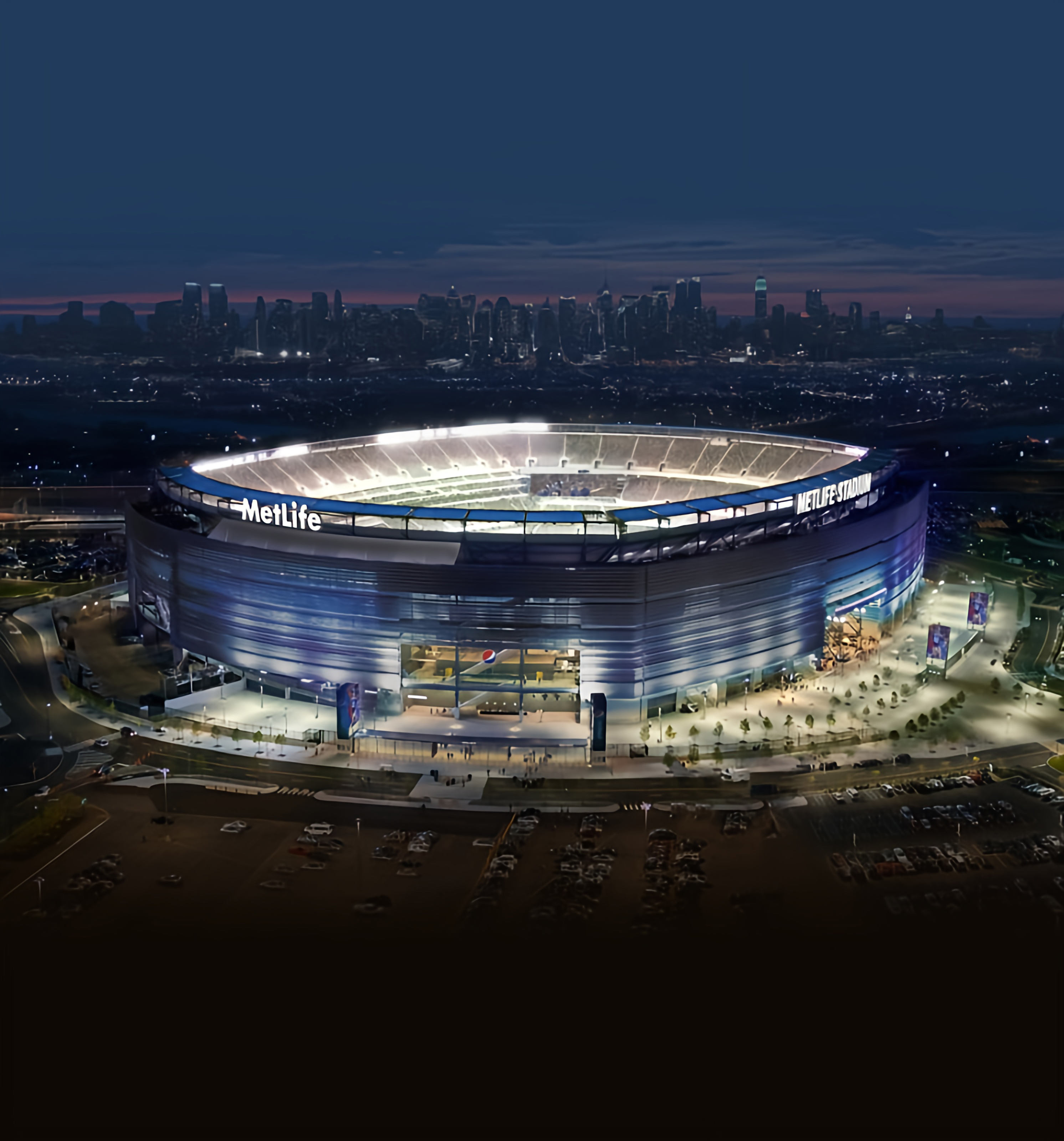
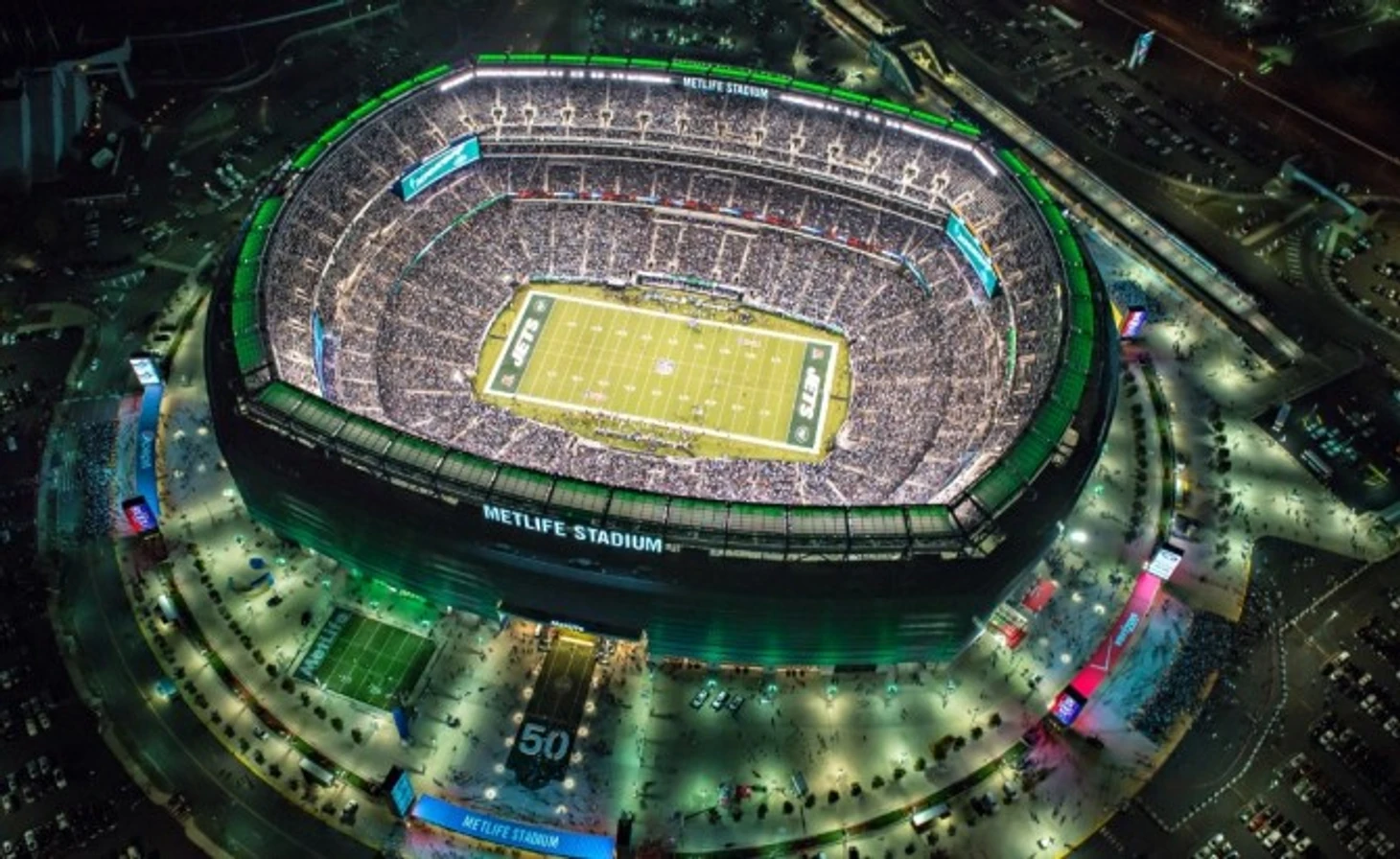
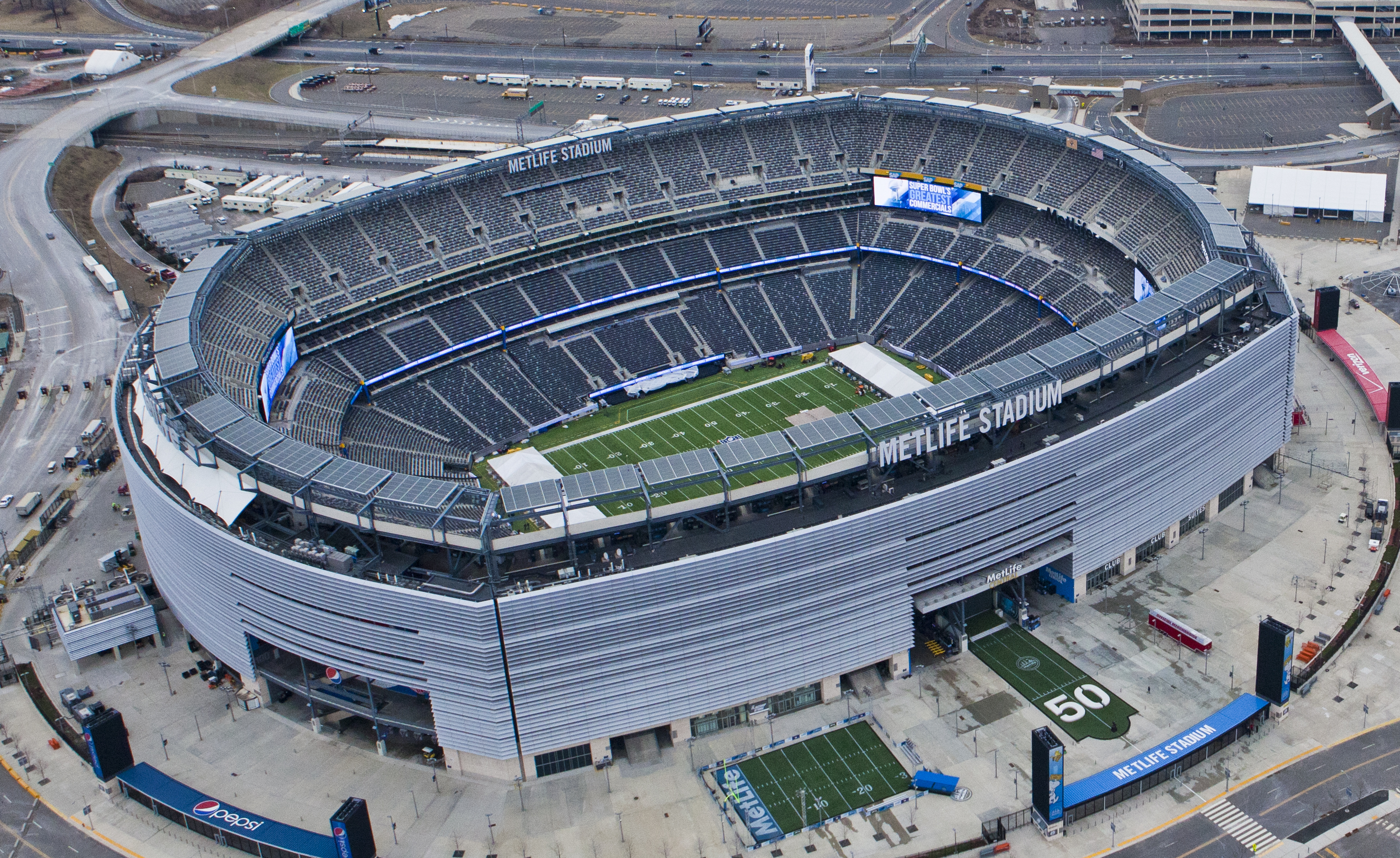
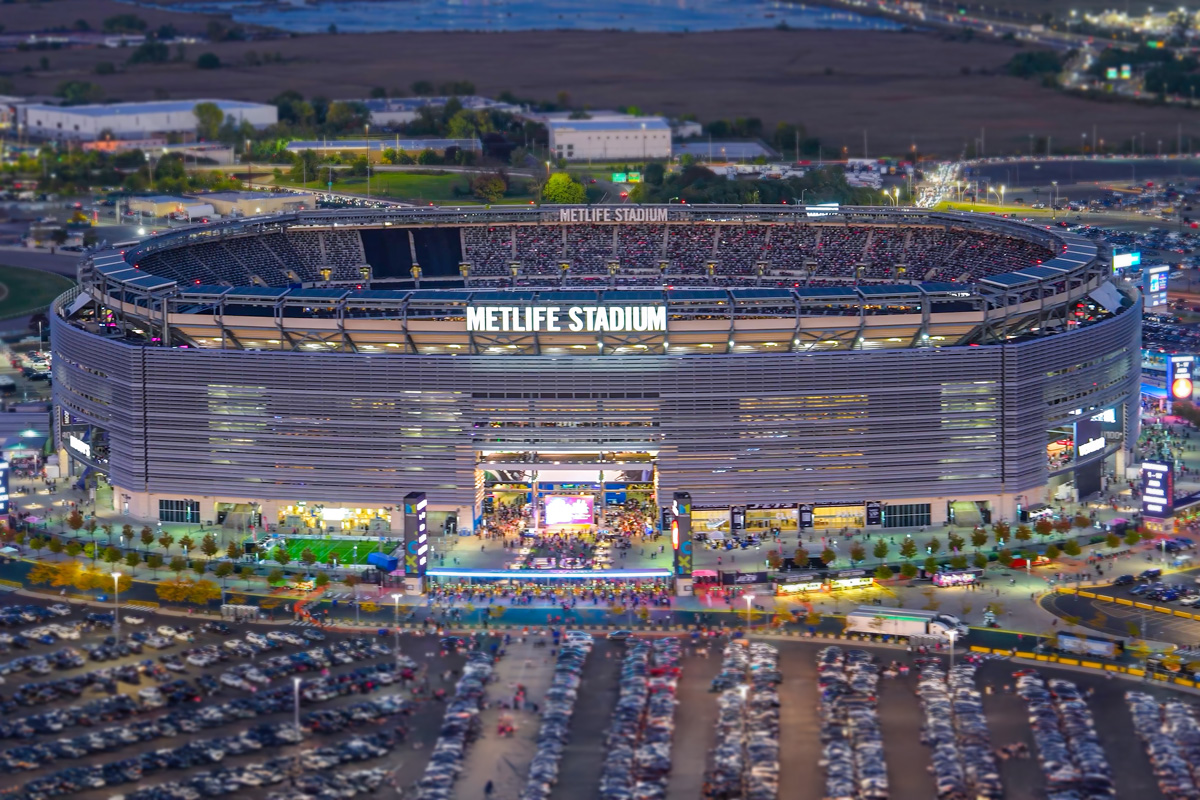
World Cup 2026 Final stadium in East Rutherford, New Jersey, 9 kilometers from Manhattan. Opened in 2010, budget $1.6 billion. The only NFL stadium shared by two teams (Giants and Jets). For the tournament, capacity has been expanded to 87,157.
New York during the Final is a different New York. Times Square transforms into a fan fest for 200,000 people, Central Park closes for guest concerts, Brooklyn Bridge Park hosts open-air viewing on giant screens. From MetLife Stadium to Manhattan Bridge — 12 km; shuttle service between them every 5 minutes. This is the first World Cup Final in the United States since 1994 and the first on the East Coast in history.
MetLife Stadium hosts 8 matches: 4 group stage (groups C, E, H — Brazil, Germany, Spain, Uruguay play right here) plus the full knockout series of Round of 16, quarterfinals, semifinals and the Final. Of the 8 matches — 4 in knockout play-offs, more than in any other city. Winners of the semifinals get 4 days rest before the most important match of their lives.
On a free day — ferry to Ellis and Liberty. 90% of US residents have ancestors who passed through Ellis Island between 1892 and 1954. Museum of immigrant families, Liberty in full view — a 4-hour program.
Northeast summer: +27°C daytime, humidity 70–80%. By the Final on July 19 peak heat — usually +32°C. Thunderstorm once a week, usually brief in the evening. Air conditioning in every bar, subway too.
For the Final — 200,000 people in the Times Square pedestrian zone. Giant screen, craft beer bar, food trucks, concert before the match. Alternative — Brooklyn Bridge Park with skyline views.
Sinatra gathered the sound, style and audience in Manhattan clubs — Paramount, Stork, Copacabana. "Start spreading the news" plays after every Yankees home win (since 1980) and in the finale of the New Year's fireworks over Times Square. The most recognizable track about the city — cross-generational.
Open in Yandex Music →№1 Billboard Hot 100, contemporary anthem of New York. After Michael Jackson's death the track got airtime on every city radio station for six months. "Concrete jungle where dreams are made of" — a phrase now known more often than Sinatra's line.
Open in Yandex Music →Biggie's debut. "It was all a dream, I used to read Word Up magazine": Bed-Stuy is recognized line by line — from projects to Fulton Street. Biography in three minutes that became the blueprint for everything written about New York afterward. In every "best rap track of all time" list.
Open in Yandex Music →From the Illmatic album — the most cited rap track about New York. Queensbridge, North America's largest residential project, described with reporter's detail. "I never sleep, 'cause sleep is the cousin of death" — the most famous opening line in New York rap history.
Open in Yandex Music →"Cash Rules Everything Around Me" — the phrase long ago transcended rap, printed on t-shirts and entered pop culture. Staten Island got its rap map: the borough always considered "not New York" in New York, wrote the most cited verse of the 90s. RZA sampled The Charmels.
Open in Yandex Music →White punks from Manhattan who became a rap group. Single from the Licensed to Ill album (first rap album to hit №1 Billboard 200). "No sleep till — Brooklyn!" — a phrase still printed on Williamsburg walls 25 years before the neighborhood became a gentrified icon.
Open in Yandex Music →Cover of hard rock classic Aerosmith, moved from niche to mainstream. №4 Billboard Hot 100 — first rap record in top-5. Run-DMC from Hollis (Queens) with one track broke the wall between rap and rock radio and brought hip-hop to MTV.
Open in Yandex Music →Hav and Prodigy describe the same Queensbridge 11 months after Nas — but without poetry, with fear. The beat built on a Herbie Hancock sample became the template for the entire East Coast school of the second half of the 90s. Recognizable track among rap fans, surfaced in pop memory after the battle from "8 Mile".
Open in Yandex Music →Q-Tip and Phife Dawg grew up in Queens, in St. Albans. The group invented "jazz rap" — soft, beat-sampled (here — Lou Reed, "Walk on the Wild Side"). Lou Reed's bass line is recognized from the first note; the image of Queens as the borough of educated hip-hop was cemented right after this track.
Open in Yandex Music →KRS-One and Scott LaRock: "South Bronx, the South-South Bronx". Less known outside hip-hop historians, but it's the formal manifesto of the first birthplace district of hip-hop. Without it, any list of New York rap is incomplete.
Open in Yandex Music →